Bhikkhunovādavagga
bhikkhunovādavaggo
21 - ovādasikkhāpadaṃ #edited
Yo pana bhikkhu asammato bhikkhunīyo ovadeyya, pācittiyaṃ.
If any bhikkhu who has not been authorised should exhort the bhikkhunīs, [this is a case] involving expiation.
background
- The Buddha was residing in the Jetavana monastery near the city of Sāvatti. During this time, senior bhikkhus used to advise bhikkhunīs. Such bhikkhus who were advising the bhikkhunīs received the four requisites such as robes in abundance. The Chabbaggiya monks who saw this incident decided to offer advice to the bhikkhunīs. They informed the bhikkhunīs to come to them to obtain advice. Then the bhikkhunīs also went to the Cabbaaggiya bhikkhus seeking advice. However, the Cabbaggiya bhikkhus spent most of the day talking about unnecessary matters with the bhikkhunīs and did not spend a lot of time preaching the Dhamma. The Tathāgata inquired about this matter from the bhikkhunīs, and they explained the incident to him. Subsequently, the Tathāgata declared a bhikkhunovādaka sammuti (a convention of appointing a monk to advice bhikkhunīs) based on this incident as: “Anujānami, bhikkhave, bhikkhunovādakaṃ sammannitum”. Afterwards, the six types of bhikkhus continued to advise the bhikkhunīs without obtaining the convention. Based on this incident, the Tathāgata declared ovāda sikkhāpada preventing a bhikkhu who does not have the bhikkhunovādaka sammuti from advising bhikkhunīs. Then the Chabbaggiya monks went into various sīmas and declared bhikkhunovādaka sammuti amongst themselves (they gave the sammuti to each other). Thereafter, they informed the bhikkhunīs that they have now obtained the bhikkhunovādaka convention, and that bhikkhunīs can come to them once again for advice. When bhikkhunīs approached them, they continued to discuss unnecessary matters more than discussing the Dhamma, just as before. The Tathāgata, having got to know about this matter, preached eight qualities a bhikkhu should have in order to be able to obtain the bhikkhunovādaka sammuti.
description
- the aṭṭhagarudhamma require bhīs to seek advice from the bh every pakkha
- 8 qualifications for being bhikkhunovāda:
- sīlavanta
- samādāya sikkhati sikkhāpadesu
- ācāra sampanna
- gocara sampanna
- aṇumattesu vajjesu bhayadassāvī
- no Sg2 w/ bhī nor sex w/ skhm/smṇī:
- not having committed kāyasaṁsagga with a bhikkhunī and not having had sex with a sikkhamānā or sāmaṇerī during his time as a layman
- piya manāpa (being agreeable and pleasing to bhikkhunīs) due to good virtue and behavior
- kalyāṇa-vāca / -vākkaraṇa
- one who speaks good meaningful words with correct articulation (-vācā) and having a pleasant voice (vākkaraṇa)
- competent in advising bhikkhunīs arousing sense of urgency in them
- bahussuta: Vp + c, 1/4 N + c, Ap + c of 4 pakaraṇa
- having studied the entire vinayapiṭaka + comm., 1 nikāya out of the 4 nikāyas (dīgha, majjhima, saṁyutta or anguttara) + comm.; entire abhidhammapiṭaka + comm. of the 4 pakaraṇas
- pātimokkha and ubhaya vibhaṅga (memorized)
- paripuṇṇa vīsativassa
- vocab: #[[pāḷi vocab (2nd year)]]
- vākkaraṇa [vācā + karaṇa] nt.↔pronunciation; enunciation; conversation; lit. making words
- bhikkhunovādaka bhikkhu↔a monk who fulfilled the 8 qualifications for bhikkhunovāda and is formally authorized by the Saṅgha to admonish bhkīs by a ñatticatuttha vinayakamma
- ovādapaṭiggāhaka↔the bhk who accepts the request for admonishment from the bhkīs
- pātimokkhuddesaka↔the bhk who recites the pātimokkha
- procedure for admonishing bhikkhunīs:
- before the uposatha day
- a few bhīs come on the 13th to inquire about the uposatha day
- on the uposatha day
- a few bhīs come on the uposatha day (14th / 15th) and request admonishment - the bhk who accepts this request is the ovādapaṭiggāhaka
- during the uposatha observance:
- the ovādapaṭiggāhaka informs the pātimokkhuddesaka of the bhkīs request
- the pātimokkhuddesaka inquires for the presence of a bhikkhunovādaka
- if one is present, the pātimokkhuddesaka instructs the ovādapaṭiggāhaka to inform the bhkīs to approach the bhikkhunovādaka
- if one is not present, the pātimokkhuddesaka inquires about the presence of one with the 8 qualifications
- if one is present, the Saṅgha should give him the sammuti on the spot, and the ovādapaṭiggāhaka instructed as above
- if one is not present, the pātimokkhuddesaka should instruct the ovādapaṭiggāhaka saying there is no bhikkhunovādaka and encouraging the bhkīs to accomplish the three-fold training with faultless actions that bring forth faith in others (pāsādikena bhikkhunīsaṅgho sampādetu); the ovādapaṭiggāhaka should accept is saying sādhu
- after the uposatha day (on the pāṭipadika)
- all bhkīs approach the ovādapaṭiggāhaka and he conveys the instruction (whether to meet the bhikkhunovādaka or pāsādikena bhikkhunīsaṅgho sampādetu)
- bhikkhunovādaka sweeps, prepares water for drinking and other uses, prepares seats and sits with another bhk in a place where many bhks normally gather
- bhkīs approach the bhikkhunovādaka
- he asks if they are living in unity
- if they answer yes, he should ask if they have learnt by heart and remember the aṭṭhagarudhamma
- if they answer yes, he should say "eso, bhaginiyo, ovādo" concluding the admonishment
- if they answer no, he should recite it
- if they answer no, he should not admonish with the aṭṭhagarudhamma
- afterwards he can give a dhamma talk
- pariveṇa nt.↔(of a monastic) room; cell; apartment; 2 nt. monastery grounds; space around a building
- exemptions for being ovādapaṭiggāhaka
- gilāna,
- gamiya (planning to travel on the 14th/15th/pāṭipadika)
- bāla (doesn't know the procedure)
- note: otherwise rejecting the bhkīs request: dkṭ
- aṭṭhagarudhamma
- respect bhk of any vassa
- not observe vassa in an area where no bhks are found - one bhikkhunovādaka is enough
- uposatha pucchaka and ovādūpasaṅkamana should be done every pakkha
- pavāraṇa in the presence of both saṅghas
- mānatta for half a month in the presence of both saṅghas of the entire village (no parivāsa)
- keeping the sikkhamāna training of 6 rules for 2 years unbroken before receiving upasampadā from both saṅghas
- 6 rules for sikkhamānas:
- abstaining from killing, stealing, having sex, lying, consuming intoxicants and eating at the wrong time
- never accuse or threaten a bhk (akkosanā, paribhāsanā)
- never advise a bhk
- these rules must be followed by bhkīs, honoring and respecting them without breach for their entire lives
- offenses
- admonishing bhkīs with 8grdh without authorization: pc
admonishing with another portion of dhamma other than the aṭṭhagarudhamma: dkṭ (under atthangatasikkhāpada this is pc)
admonishing with the 8grdh after the bhkīs say they are not in unity: dkṭ
teaching additional dhamma after the 8grdh without concluding with "eso, bhaginiyo, ovādo": dkṭ
advising an ekato upasampanna bhkī: dkṭ
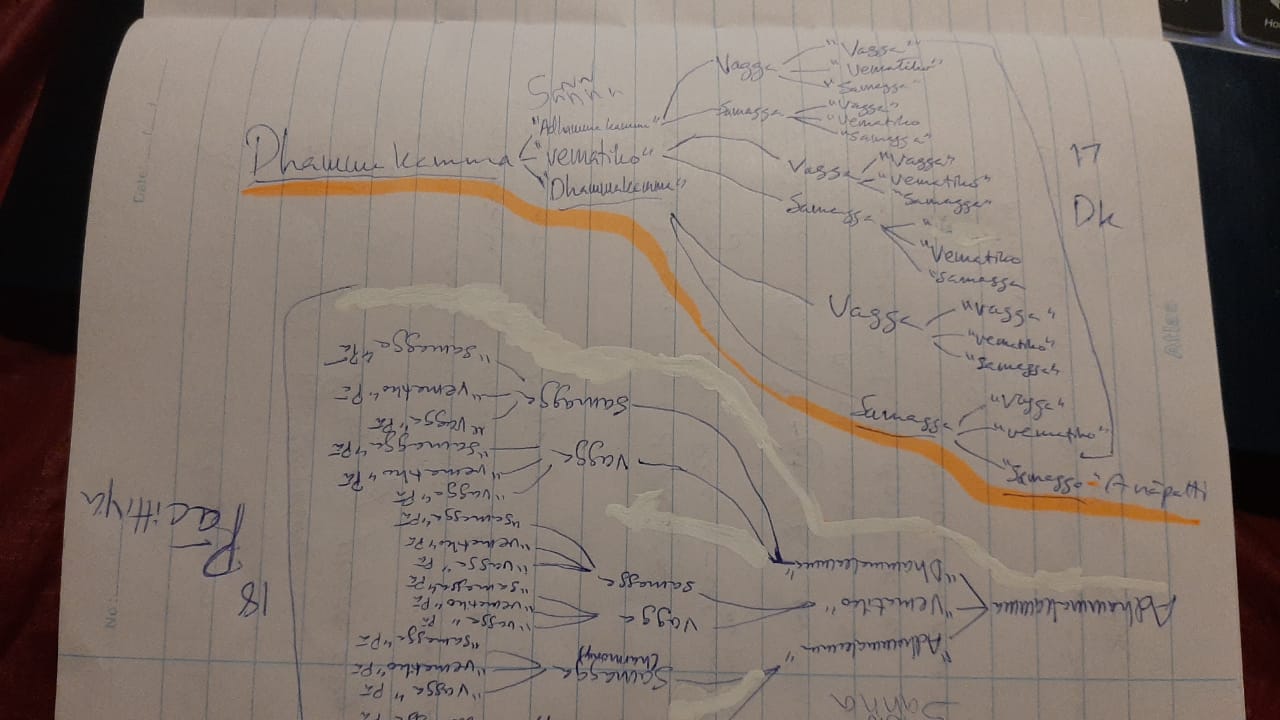
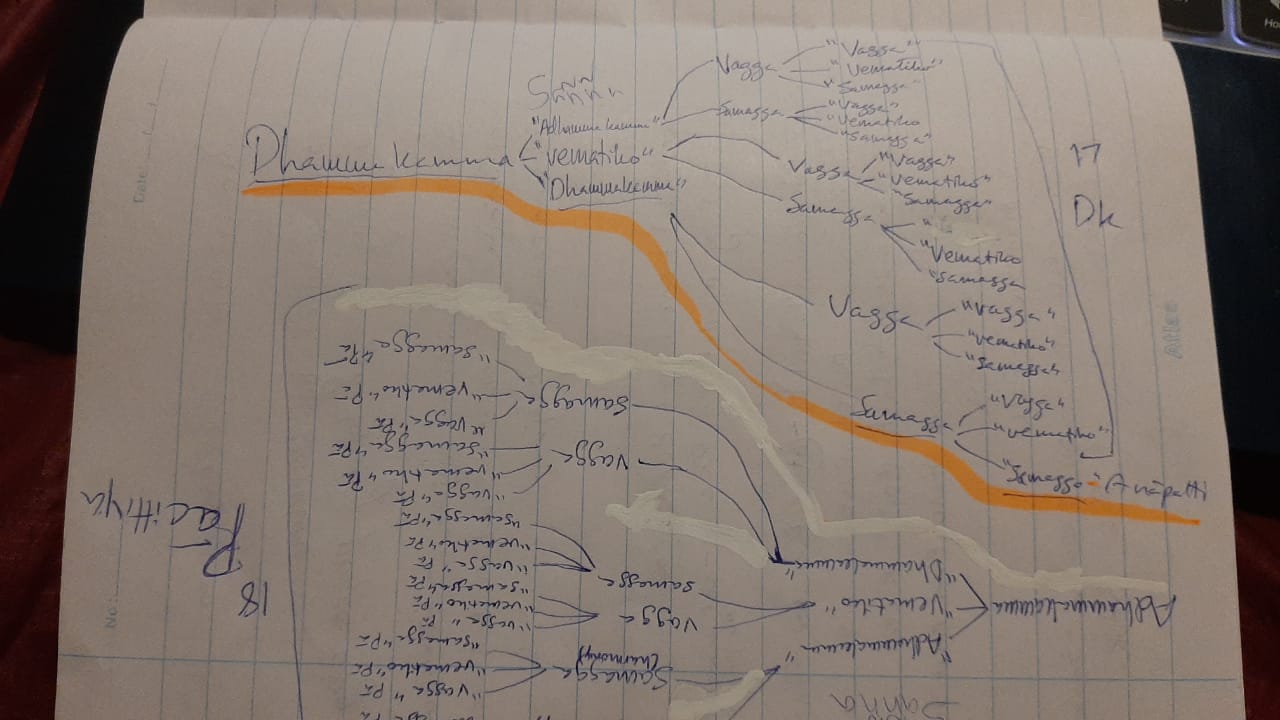
- if adhammakamma...: pc (18)
if dhammakamma...: dkṭ (17)
- except dhammakamma, dhammakammasaññī, samagga bhkī saṅgha, samaggasaññī: anāpatti
examples:
adhammakamma, adhammakammasaññī, vagga bhkī saṅgha, vaggasaññī: pc
adhammakamma, dhammakammasaññī, vagga bhkī saṅgha, vaggasaññī: pc
adhammakamma, dhammakammasaññī, samagga bhkī saṅgha, samaggasaññī: pc
dhammakamma, adhammakammasaññī, vagga bhkī saṅgha, vaggasaññī: dkṭ
dhammakamma, dhammakammasaññī, samagga bhkī saṅgha, vaggasaññī: dkṭ
dhammakamma, dhammakammasaññī, samagga bhkī saṅgha, samaggasaññī: anāpatti
...
this is an aṭṭhārasa-pācittiya and sattarasa-dukkaṭa offence
saññās involved are:
- adhammakamma-/dhammakamma-saññā (perception that the vinayakamma by which the sammuti was given to oneself was or was not righteously done)
- vagga-/samagga-saññā (the perception that the Bhikkhunī Saṅgha is not or is in harmony)
this is an (sa/acittaka?) acittaka, (no/saññāvimokkha?) nosaññāvimokkha training rule
- anāpatti
- asammata bhikkhu who teaches 8grdh does not entail an offense if:
- if he does so while teaching dhamma (uddesaṃ dento) or the commentaries (paripucchaṃ dento)
- osārehi ayyā (when they request)
- pañhaṃ pucchati, pañhaṃ puṭṭho katheti (as an answer to a question)
- aññassatthāya bhaṇantaṃ bhikkhunīyo suṇanti (if they listen to the eight cardinal rules that are being taught to someone else)
- sikkhamānāya, sāmaṇeriyā
- aṅga
- bhikkhu asammato: being a bhikkhu who had not received the bhikkhunovāda sammuti
- bhikkhunīyo: the one receiving advice being an ubhato upasampannā bhikkhunī
- ovadeyya: admonishing with aṭṭha garudhamma
- note:
- adhisikkhā
- lokiya
- adhisīla: upasampadā sīla
- adhicitta: jhānacittas as base for vipassanā
- adhipaññā: vipassanā paññā
- lokuttara
- adhisīla: sammāvācā, sammākammanto, sammāājīva cetasikas in magga/phalacittas
- adhicitta: magga/phala cittas
- adhipaññā: sammādiṭṭhi
- (not in exams) (WIP) in another place of the comm: if bhikkhunovādaka monk is leaving for seclusion he can apoint another monk to advise the bhkīs; so there can be a bhikkhunovādaka substitute who has not been given the sammuti; it is controversial, even a sāmaṇera can be appointed like this; so 4 types are given:
- sammata upasampanna bhikkhunovādaka
- asammata upasampanna bhikkhunovādaka / ṭhapita - qualifications: bahussuta endowed with the 8 qualities (compulosory-ness of these is questionable); (some say this one is the one ovādapaṭiggahaka who is appointed by the saṅgha "pāsādikena sampadetha"; vajirabuddhi thinks not because just saying that is not ovāda)
- appointed by the sammata upa bhikkhunovādaka
- appointed by saṅgha
- sammata anupasampanna bhikkhunovādaka: a sammata upasampanna bhikkhunovādaka who directly becomes a sāmaṇera
- asammata anupasampanna bhikkhunovādaka: qualifications: bahussuta
- appointed by the sammata upa bhikkhunovādaka
- appointed by saṅgha
- note: connects with the previous rule in bhūtagāmavagga, ujjhāpanaka
22 - atthaṅgatasikkhāpadam #edited
Sammatopi ce bhikkhu atthaṅgate suriye bhikkhunīyo ovadeyya, pācittiyaṃ.
Even if a bhikkhu who has been authorised should exhort the bhikkhunīs after the sun has set, [this is a case] involving expiation.
background
- The Tathāgata was residing in the Jetavana monastery near Sāvatthi. During this time, elderly monks used to admonish bhikkhunīs in turns. Once it was the turn of Venerable Cullapanthaka. That day he admonished nuns, illustrating his psychic powers, till the sunset. Therefore, bhikkhunīs could not go back into the city that day. They spent the night outside the city walls and entered the city early in the morning. Seeing the nuns who were entering the city early in the morning, people started the bad mouth nuns and monks saying, “These nuns, having spent the night in the monastery with monks, now enter the city. They are not celibate”. Knowing this incident, the Tathāgata imposed the atthaṅgata training rule.
offenses
- advising after sunset: pc
advising after sunset with aṭṭhagarudhamma: pc
advising after sunset with any other dhamma: pc! (under other rules this is a dkṭ)
advising ekatoupasampannās after sunset: dkṭ
teaching dhamma or the commentaries: anāpatti, since the offense is for admonishing
- this is (sa/acittaka?) acittaka (no/saññāvimokkha?) nosaññāvimokkha rule
- advising after sunset
atthaṅgatasaññī: pc
vematiko: pc
anatthaṅgatasaññī: pc
advising before sunset:
atthaṅgatasaññī: dkṭ
vematiko: dkṭ
anatthaṅgatasaññī: anāpatti
tikapācittiya
duka dukkaṭa
anāpatti (same as bhikkhunovādasikkhāpadaṁ)
- uddesaṃ dento / paripucchaṁ dento: while teaching Dhamma or the commentaries since the offense is for admonishing
- osārehi ayyā: when they request
- pañhaṃ pucchati, pañhaṃ puṭṭho katheti: as an answer to a question they have asked even after the sunset
- aññassatthāya bhaṇantaṃ bhikkhunīyo suṇanti: if the bhikkhunīs listen to the Dhamma preached to someone else after the sunset
- sikkhamānāya sāmaṇeriyā: to sikkhamānās and sāmaṇerīs
- vocab: #[[pāḷi vocab (2nd year)]]
- osāreti→pr. reinstates, expounds
aṅga
- atthaṅgate suriye: the sun having set
- bhikkhunīyo: the one receiving admonishment being an ubhato upasampannā bhikkhunī
- ovadeyya: admonishing
23 - bhikkhunupassayasikkhāpadaṃ #edited
Yo pana bhikkhu bhikkhunūpassayaṃ upasaṅkamitvā bhikkhunīyo ovadeyya, aññatra samayā, pācittiyaṃ. Tatthāyaṃ samayo, gilānā hoti bhikkhunī. Ayaṃ tattha samayo.
If any bhikkhu, having approached the bhikkhunī-quarters, should exhort the bhikkhunīs, except at the [right] occasion, [this is a case] involving expiation.
background
- The Tathāgata was residing in the Nīgrodha monastery in the city of Kapilavattu in the region of Sakka. During this time, the Chabbaggiya monks were in the habit of visiting the Chabbaggiya bhikkhunīs at their residential quarters (bhikkhunupassaya) and offering advice (ovāda). One day, the rest of the bhikkhunīs called on the six types of bhikkhunīs to go up to the bhikkhus to obtain advice. Then the Chabbaggiya bhikkhunīs informed them that the Chabbaggiya monks come to them to offer advice. The bhikkhunīs then informed this matter to the bhikkhus. The Tathāgata who came to know of this incident from the bhikkhus, declared the bhikkhunupassaya training rule. Once when Venerable Mahāpajāpatī Gotamī fell ill, bhikkhus came to see her. She requested the bhikkhus to preach the Dhamma to her as she was sick. However, the bhikkhus refused to do so due to this training rule. The Buddha also visited Venerable Mahāpajāpatī Gotamī to inquire after her. In this instance she said to the Buddha, “Earlier it was very easy for me as bhikkhus who visited preached the Dhamma to me, but now they do not do so saying that such acts have been prohibited by the Buddha”. Thereafter, based on this incident, the Tathāgata declared a sub-charter to the training rule and amended it, allowing bhikkhus to visit bhikkhunīs at their residential quarters when they are sick, to offer advice.
- taṅhaṁ nissāya taṅhaṁ pajahati...mānaṁ...but not methuna
description
- bhikkhunupassaya→“Bhikkhunupassayo nāma yattha bhikkhuniyo ekarattampi vasanti” - a place where at least one bhkī is spending at least one night - even a lay house - as soon as they reach the place intending to spend the night, it becomes so (vāsūpagataṭṭhāna); it is called kappiyabhūmi and bhks can visit the place even with one shoulder exposed
offenses
- admonishing bhkīs with 8grdh by visiting a bhikkhunupassaya: pc
admonishing bhkīs with other dhamma by visiting a bhikkhunupassaya: dkṭ (under atthaṅgatasikkhāpada this is a pc)
admonishing an ekato upasampannā with 8grdh / other dhamma by visiting a bhikkhunupassaya: dkṭ
doing so if they are sick: anāpatti
admonishing bhkī:
upasampannasaññī: pc
vematiko: pc
anupasampannasaññī: pc
admonishing a non-bhkī:
upasampannasaññī: dkṭ
vematiko: dkṭ
anupasampannasaññī: anāpatti
this is (sa/acittaka?) acittaka (no/saññāvimokkha) nosaññāvimokkha rule
this is a tika-pācittiya and duka-dukkaṭa offence
the perception being upasampanna / anupasampanna saññā (perception of the listener as fully ordained or not)
anāpatti (same as ovāda)
- uddesaṃ dento / paripucchaṁ dento: while teaching Dhamma or the commentaries since the offense is for admonishing
- osārehi ayyā: when they request
- pañhaṃ pucchati, pañhaṃ puṭṭho katheti: as an answer to a question they have asked even after visiting a bhikkhunupassaya
- aññassatthāya bhaṇantaṃ bhikkhunīyo suṇanti: if the bhikkhunīs listen to the Dhamma preached to someone else after the sunset
- sikkhamānāya sāmaṇeriyā: to sikkhamānās and sāmaṇerīs
aṅga
- bhikkhunūpassayaṃ upasaṅkamitvā: visiting a bhikkhunupassaya
- bhikkhunīyo: the admonished being an ubhato upasampannā bhikkhunī
- ovadeyya: advising with aṭṭha garudhamma
- aññatra samayā...Tatthāyaṃ samayo, gilānā hoti bhikkhunī. Ayaṃ tattha samayo.: not being the occasion when a bhkī is sick
24 - āmisasikkhāpadam #edited
Yo pana bhikkhu evaṃ vadeyya, ‘Āmisahetu therā bhikkhū bhikkhunīyo ovadantīti, pācittiyaṃ.
If any bhikkhu should say so: “The bhikkhus exhort bhikkhunīs for the sake of reward,” [this is a case] involving expiation.
background
- Buddha: Sāvatthi
Chabbaggiyas, out of envy of the theras who were receiving much gain due to admonishing the bhikkhunīs, accused them of doing so out or greed for requisites.
- second anupaññātti must have been promulgated after 20 years of the sāsana, otherwise there would be no monks who could fulfill the 20 vassa requirement
description
- 3 intentions
- avaṇṇaṁ kattukāmo (the intention of criticizing)
- ayasaṃ kattukāmo (defaming)
- maṅkukattukāmo (silencing)
- 6 bases of criticism (not for exam) under āmisahetu
- with the expectation of receiving four requisites (catupaccayahetu),
- for the sake of honour (sakkārahetu),
- for the sake of reverence (garukārahetu),
- for the sake of respect (mānanahetu),
- for the sake of worship (vandanahetu)
- and for the sake of veneration (pūjanahetu)
- criticizing a bhikkhunovādaka thera who admonishes the bhī without the expectation of four requisites: pc
doing so to an unauthorized bhikkhu: dkṭ
doing so to a sāmaṇera: dkṭ
doing so to a bhk or smṇ that is actually admonishing out of āmisahetu: anāpatti
criticizing believing the bhk / smṇ to be actually āmisahetu: anāpatti
- note:
- the criticism must be voiced to someone else
- it seems like it could be a musāvāda here, but comm. do not mention it as so
nature
- criticizing a sammata upasampanna bhikkhunovādaka who admonishes the bhī without the expectation of four requisites (na āmisahetu):
dhammakammasaññī: pc
vematiko: pc
adhammakammasaññī: pc
criticizing an asammata upasampanna
dhammakammasaññī: dkṭ
vematiko: dkṭ
adhammakammasaññī: dkṭ
this is a tika-pācittiya and tika-dukkaṭa offence
the perception involved here is dhammakamma / adhammakamma saññā (perception that the vinayakamma via which
the bhikkhunovādaka sammuti was given was righteous or not)
this is (sa/acittaka?) sacittaka (no/saññāvimokkha?) saññāvimokkha offence (here the sacittaka and saññāvimokkha natures do not refer to the dhammakammasaññā)
- doing so to a na āmisahetu thera:
na āmisahetusaññī: pc
āmisahetusaññī: anāpatti
doing so to an āmisahetu thera:
na āmisahetusaññī: dkṭ
āmisahetusaññī: anāpatti
aṅga
- therā bhikkhū: the one being reprimanded being an upasampanna
- the monk who is being reprimanded has received the bhikkhunovādaka sammuti via a righteous vinayakamma
- na āmisahetu: the thera not giving ovāda with the expectation of requisites, respect etc.
- criticizing the elderly monk
25 - cīvaradānasikkhāpadam #edited
Yo pana bhikkhu aññātikāya bhikkhuniyā cīvaraṃ dadeyya, aññatra pārivattakā, pācittiyaṃ.
If any bhikkhu should give a robe [-cloth] to an unrelated bhikkhunī, except in an exchange, [this is a case] involving expiation.
background
- The Tathāgata was residing in the Jetavana monastery in the city of Sāvatti. During this time a bhikkhu and a bhikkhunī who were seeking pindapāta along the same route met frequently and became friends. On a day, saṅghika robes were distributed among the monks. That monk offered the piece of robe he received to this bhikkhunī. Since the bhikkhunīs robes were fragile, it was accepted by her. The bhikkhu also had a fragile robe. The other bhikkhus who saw this, asked him to prepare a new robe. Then that bhikkhu told them that he had given the piece of robe he received to a bhikkhunī who he was friends with. The Tathāgata who got to know about this incident from other bhikkhus called that monk and inquired if the bhikkhunī of concern is related to him. When he replied, “No”, the Buddha reprimanded him preaching that two unrelated individuals would not know what is appropriate and inappropriate and declared this training rule.
description
- difference between this and the cīvara pratiggahana nissaggiya training rule→the only difference is that the receiver in that training rule is a bhikkhu, whereas in this, it is a bhikkhunī
26 - cīvarasibbanasikkhāpadam #edited
Yo pana bhikkhu aññātikāya bhikkhunīyā cīvaraṃ sibbeyya vā sibbāpeyya vā, pācittiyaṃ.
If any bhikkhu should sew a robe or should have a robe sewn for an unrelated bhikkhunī, [this is a case] involving expiation.
background
- The Tathāgata was residing in the Jetavana monastery in the city of Sāvatti. A bhikkhunī went up to Venerable Udāyī (also known as Laludāyī) who was an expert in making robes (cīvarakamma) and requested a robe be sewn for her.2 Then Venerable Udāyī stitched a robe, dyed it beautifully, ensured that all other prerequisites of a robe were met and drew an art of a male and female human, who are having sex, in the middle of the robe and folded the robe and kept it. When the bhikkhunī came and asked for the robe, he gave the robe saying, “Wear this and go behind all bhikkhunīs when visiting to obtain advice”. The bhikkhunī followed his instructions. People who saw her in this robe, criticized her. The Tathāgata who got to know about this incident from other bhikkhus called Venerable Udāyī and inquired if the bhikkhunī of concern is related to him. When Venerable Udāyī said, “No”, the Buddha reprimanded him preaching that two unrelated individuals would not know what is appropriate and inappropriate; and declared this training rule.
- note: This bhikkhunī was the former wife of Venerable Udāyī.
description
- nivāsanūpaga cīvara↔robe suitable to be worn around the waist (antaravāsaka)
- pārupanūpaga cīvara↔robe suitable to be donned around the body (uttarāsaṅga / saṅghāṭi)
- 9 nivāsana pārupana cīvara (not the 9 robes ending with parikkhāracoḷa)
- (3) ticīvara
- vassikasāṭika
- kaṇḍupaṭicchādī (itch-covering robe)
- saṅkaccika (a robe for nuns used to cover the chest)
- aṃsavaṭṭa – inner robe, shoulder strap
- udakasāṭika – bathing robe for nuns
- āvasatha cīvara – robe allowed to menstruating nuns
- vocab: #[[pāḷi vocab (2nd year)]]
- saṅkaccika [saṃ + √kañc (bind, cover) + a + ika] nt.→top; vest; bodice; lit. binding together
- ārapatha↔a stitch (path of a needle); each time the needle pierces through and is taken out (even if it goes multiple times through the cloth)
- akappiya samādāna↔involving any sahadhammika in acts that breach a vinaya rule
offenses
- sewing (/c) a robe for an aññātika bhkī: pc every ārapatha
marking the measurements on the cloth and cutting it, while being ready to sew a robe: dkṭ
ordering another once, "sew", and the entire process is done: 1 pc for the orderer, multiple pc for the sewer according to the number of ārapathas
ordering another once, “If there is anything to be done in regard to this robe, all of that will be your responsibility”: the orderer incurs pc for every ārapatha done by the ordered
giving multiple orders: multiple pc
in any case the ordered incurs: pc for every ārapatha
- sewing for an ekato upasampannā aññātika bhkī: dkṭ
sewing for a ñātika bhkī: anāpatti
when a teacher is sewing for his ñātika bhkī, students join thinking of fulfilling duties: pc for the students for every ārapatha
teacher instructs students to sew for his ñātika bhkī: akappiya samādāna dkṭ for the teacher, and pc for the students
if the bhkī is ñātika of the students as well: anāpatti
if the bhkī is ñātika of the students but they don't know: akappiya samādāna dkṭ for the teacher and dkṭ for the student for sewing for a ñātika with aññātikasaññā
if the teacher just says "sew a robe" without telling the student it is for a bhkī: anāpatti
- Vañcetvāti "tava ñātikāyā"ti avatvā "ekissā bhikkhuniyā"ti ettakameva vatvā. "ekissā bhikkhuniyā"ti sutvā te aññātikasaññino bhaveyyunti āha "akappiye niyojitattā"ti. "idaṃ te mātu cīvara"ntiādīni avatvāpi "idaṃ cīvaraṃ sibbehī"ti suddhacittena sibbāpentassapi anāpatti. (Srd-ṭ. III. 40-50).
- sewing for aññātika bhkī:
aññātakasaññī: pc
vematiko: pc
ñātakasaññī: pc
sewing for ñātaka bhkī:
aññātakasaññī: dkṭ
vematiko: dkṭ
ñātakasaññī: anāpatti
it is a tika-pācittiya and duka-dukkaṭa offense
this is (sa/acittaka?) acittaka, (no/saññāvimokkha?) nosaññāvimokkha offence
anāpatti
- sewing something other than nivāsana/pārupana cīvara
- sewing for a sikkhamānā or sāmaṇerī
aṅga
- aññātikāya bhikkhunīyā: the robe being made for an aññātikā bhikkhuṇī
- cīvaraṃ: the robe being either a nivāsanūpaga or pārupanūpaga cīvara
- sibbeyya vā sibbāpeyya vā: sewing (/c)
vocab: #[[pāḷi vocab (2nd year)]]
- upāhanatthavika→slipper bag
27 - saṃvidhānasikkhāpadam #edited
Yo pana bhikkhu bhikkhunīyā saddhiṃ saṃvidhāya ekaddhānamaggaṃ paṭipajjeyya antamaso gāmantarampi, aññatra samayā, pācittiyaṃ. Tatthāyaṃ samayo: satthagamanīyo hoti maggo, sāsaṅkasammato sappaṭibhayo. Ayaṃ tattha samayo.
If any bhikkhu, having made an arrangement, should travel together with a bhikkhunī on the same main road, even [if] just the distance between villages, except at the [right] occasion, [this is a case] involving expiation.
- vocab:
- saṃvidhāya [saṃ + vi + √dhā + ya]↔ger. (+acc) arranging; organising; planning
background
- The Tathāgata was residing in the Jetavana monastery near the city of Sāvatti. During this time, the Chabbaggiya monks used to organise journeys and travel with bhikkhunīs. People started criticising this act saying, “These bhikkhus are travelling with bhikkhunīs in the same way we travel with our wives.” The Tathāgata who got to know about this matter from the bhikkhus, declared the saṃvidhāna training rule. At a later time, many bhikkhus and bhikkhunīs were using the same route to travel to Sāvatti from the city of Sāketa. The bhikkhunīs told the bhikkhus that they would like to travel with them, however, the bhikkhus were reluctant due to this training rule. They told the bhikkhunīs to go before or after them. Then the bhikkhunīs travelled after the bhikkhus telling them that they should be ahead of them and must travel before them as they are great men. Then the bhikkhunīs who were travelling after the bhikkhus were robbed and raped by a gang of thieves. The Tathāgata having got to know about this incident, redeclared this training rule adding a sub-charter.
description
- purpose→it is an inappropriate act for bhikkhus who live a celibate life to get together with bhikkhunīs and arrange to travel together since it can lead to lots of criticism from society - this rule prevents that
- visaṅketa↔failing to go as planned, failure of rendezvous
- 3 types of visaṅketa under saṁvidhāna
- kālavisaṅketa – not going at the planned time (frees one from the offense)
- dvāravisaṅketa – not going through the planned city gate (does not free one from the offense) (both together go through a different gate)
- maggavisaṅketa – not taking the planned route (does not free one from the offense) (both together take a different route)
offenses
- bhk arranges with a bhkī, they travel as planned: pc
if they take a different gate or road (together): pc
if they go at another time (together): anāpatti
how offenses are counted: pc for every village boundary passed / every village entered / where there are no villages, every 1/2 yojana passed
if only the bhk plans: dkṭ
if only the bhkī plans: anāpatti
arranging with an ekato upasampannā / skhm / smṇī: pc under the saṁvidhānasikkhāpada - travelling with a woman
- just arranging is a dkṭ? #q🙋🏼♂
- arranging to go on a different road...?
- monk arranged a journey with a bhkī and travels with:
saṁvidahitasaññī (perception that he arranged a journey with a bhkī): pc
vematiko: pc
asaṁvidahitasaññī: pc
monk did not arrange a journey with a bhkī:
saṁvidahitasaññī: dkṭ
vematiko: dkṭ
asaṁvidahitasaññī: anāpatti
it is a tika-pācittiya and duka-dukkaṭa offence
this is (sa/acittaka?) acittaka (no/saññāvimokkha?) nosaññāvimokkha
anāpatti
- if the road is satthagamanīya sāsaṅkasammata sappaṭibhaya, bhikkhus must accompany them for safety but after reaching a safe region, monks must tell the bhikkhunīs to go by themselves
- if only the bhikkhunī organizes the trip and the bhikkhu does not accept
- if there is kāla visaṅketa
- during āpadā
- note:
- kappiyabhūmi: arranging a journey in a bhikkhunupassaya is not an offense, but actually travelling is
aṅga
- bhikkhu bhikkhunīyā saddhiṃ saṃvidhāya ekaddhānamaggaṃ paṭipajjeyya: both the monk and the nun planning the trip and entering the road
- no kāla visaṅketa
- aññatra samayā, pācittiyaṃ. Tatthāyaṃ samayo: satthagamanīyo hoti maggo, sāsaṅkasammato sappaṭibhayo: not being the suitable time to travel together
- no āpadā
- antamaso gāmantarampi: reaching a different village or having travelled half a yojana
28 - nāvābhiruhanasikkhāpadam #edited
Yo pana bhikkhu bhikkhuniyā saddhiṃ saṃvidhāya ekaṃ nāvaṃ abhirūheyya uddhaṃgāminiṃ vā adhogāminiṃ vā, aññatra tiriyaṃ taraṇāya, pācittiyaṃ.
If any bhikkhu, having made an arrangement, should embark [on a voyage] together with a bhikkhunī on the same boat, which is going up [-stream] or which is going down [-stream], except with [a boat which is] crossing over [a river], [this is a case] involving expiation.
background
- The Tathāgata was residing in the Jetavana monastery near the city of Sāvatti. During this time the Chabbaggiya bhikkhus got together with the bhikkhunīs and embarked same vessels. People started criticizing this act saying, “These bhikkhus are enjoying themselves with the bhikkhunīs in vessels just as we enjoy ourselves with our wives”. The Tathāgata who got to know about this incident from the other bhikkhus declared the nāvābhiruhana training rule. At a later time, many bhikkhus and bhikkhunīs were using the same route to travel to Sāvatti from the city of Sāketa. There was a river to be crossed on this route. The bhikkhunīs said that they would prefer to cross the river with the bhikkhus, however, the bhikkhus refused to do so due to this training rule. The bhikkhus told the bhikkhunīs to cross the river before or after them. Then the bhikkhunīs crossed the river after the bhikkhus, requesting them to cross first proclaiming that their great men. Then the bhikkhunīs who crossed the river after the bhikkhus were robbed and raped by a gang of thieves. The Tathāgata having got to know about this incident from the bhikkhus, redeclared this training rule adding a sub-charter allowing monks to travel with nuns, having organized, in the same vessel in order to cross the river.
description
- 3 visaṅketa under nāvābhiruhanasikkhāpada
- kālavisaṅketa – not going at the planned time (no offense)
- titthavisaṅketa – not embarking on the vessel at the planned harbor (does not free one from the offense)
- nāvāvisaṅketa – not travelling in the planned vessel (does not free one from the offense)
offenses
- how offenses are counted: pc every bank that borders a village / every village passed / when there are no villages or the vessel travels in the center of a river 16 yojanas in width, every 1/2 yojana
arranging and travelling in a vessel with a bhkī to cross a river: anāpatti
while crossing, if the vessel has to be maneuvered up-/down-stream: anāpatti
arranging and travelling in a lake / sea: anāpatti
- Pāḷiyaṃ "uddhaṃgāminiṃ vā adhogāminiṃ vā"ti vacanato pana vāpisamuddādīsu kīḷāpurekkhāratāyapi gacchantassa anāpatti. Tenāha "samudde pana yathāsukhaṃ gantuṃ vaṭṭatī"ti. (Kṅv-abh-ṭ. 377.).
nature
- this is (sa/acittaka?) acittaka (no/saññāvimokkha?) nosaññāvimokkha offence
this is a tika-pācittiya and duka-dukkaṭa offence
the saññā involved being saṃvidahita-/asaṁvidahita-saññā (perception that he arranged a journey with a bhkī to travel in a vessel or not)
how can this rule be broken with kusala / akusala / abyākata citta?
- kusala: develops kammaṭṭhāna during the trip and offenses occur while he has kusalacittas
- akusala: doing so due to lust (lokassāda) or friendship (mittasanthava) and offenses occur when he has akusalacittas
- abyākata
- vipāka: while sleeping during the journey offenses occur while having vipākacittas
- kiriya: attains arahantship on the vessel itself and offenses occur when he has kiriyacittas
- vocab: #[[pāḷi vocab (2nd year)]]
- mittasanthava↔masc. companionship; close association with a friend; intimate acquaintance
29 - paripācitasikkhāpadam #edited
Yo pana bhikkhu jānaṃ bhikkhuniparipācitaṃ pindapātaṃ bhuñjeyya, aññatra pubbe gihīsamārambhā, pācittiyaṃ.
If any bhikkhu should knowingly eat alms-food which a bhikkhunī has caused to be prepared, except through previous arrangement of householders, [this is a case] involving expiation.
- vocab: #[[pāḷi vocab (2nd year)]]
- samārambha [saṃ + ā + √rabh + a + a] masc.→initiative; undertaking; activity
background
- The Tathāgata was residing in the Veḷuvana monastery in the city of Rājagaha. During this time, the Bhiikkhunī named Venerable Thullanandā was in the habit of visiting a certain household for meals. One day, the head of the house invited bhikkhus for a meal. Venerable Thullanandā, having visited the house that morning was informed of this donation of food, and she inquired about the bhikkhus who had been invited. Then the head of the house replied with a list of names of the bhikkhus: Sāriputta, Mahāmoggallāna, Mahākaccāna, Mahākotthita, Mahākappina, Mahācunda, Anuruddha, Revata, Upāli, Ānanda and Rāhula. Then Venerable Thullanandā asked why he invited such worthless monks (ceṭaka) when he could invite great men (mahānāga). The man then asked who these mahānāgas are, and to this Venerable Thullanandā replied saying, “Venerable Devadatta, Venerable Kokālika, Venerable Katamodakatissa, Venerable Khaṇḍadeviyāputta and Venerable Samuddadatta”. Venerable Sāriputta and the rest of the bhikkhus arrived at the residence when this conversation was taking place. Then Venerable Thullanandā told the head of the house, “It is true that you have invited mahānāgas”. The man got angry and said: “You just called these bhikkhus worthless and now you are saying that they are great men”. He immediately got her to leave his house and cancelled the regular meals he had been offering her.
- The bhikkhus began criticizing Venerable Devadatta saying, “How dare Venerable Devadatta consumes meals that bhikkhunīs had instructed lay people to prepare”. The Buddha then called Venerable Devadatta and inquired after this matter after which he accepted the claim. The Tathāgata reprimanded Devadatta and declared the paripācita training rule.
- One day, a bhikkhu who had got ordained in Rājagaha was travelling to a relative’s house. The relative prepared dāna for him. A bhikkhunī who is frequently visiting this household, told them “Please offer alms to the Noble monk”. Then the bhikkhu, being suspicious if the dāna had been cooked under the instruction of that bhikkhunī, refused to accept the alms. He could not have his meal that day as he was unable to go on piṇḍapāta as well. The Tathāgata who got to know about this incident from other bhikkhus, redeclared the training rule including a sub-charter allowing monks to have a meal initially organized by the lay devotees even if a nun asks the lay devotees to offer the meal to a monk.
description
- bhikkhuniparipācita bhojana
- a meal of one of the pañca bhojanas
- prepared by a devotee who is aññātaka appavārita of both the bhkī and the bhk
- initially, the devotee was not intending to offer or make the meal
- the devotee only does so after a bhkī praises the bhk and encourages the devotee to give / make it saying detha / karotha
- note:
- Bhikkhunī nāma ubhatosaṅghe upasampannā. Paripāceti nāma pubbe adātukāmānaṃ akattukāmānaṃ – "ayyo bhāṇako, ayyo bahussuto, ayyo suttantiko, ayyo vinayadharo, ayyo dhammakathiko, detha ayyassa, karotha ayyassā"ti esā paripāceti nāma.
- gihisamārambha bhojana
- a meal of one of the five bhojanas that is prepared for a bhk by a devotee before a bhkī gets involved in the preparation
- meals of ñātaka and pavārita individuals are gihisamārambha even before being cooked - they are considered as if they have begun to be cooked - and can be requested and arranged as desired: "Gihisamārambho nāma ñātakā vā honti pavāritā vā pakatipaṭiyattaṃ vā"
- vocab: #[[pāḷi vocab (2nd year)]]
- pakatipaṭiyatta [pakati + paṭiyatta]↔adj. naturally performed; ordinarily prepared
- pañcabhojana
- odana (boiled rice)
- kummāsa (a food made by half-boiling rice)
- some say it is just the half-boiled rice
- kummāsa is a food made out of barley, in Sri Lanka called “piṭṭu”
- sattu (flour made by roasting seven types of pubbaṇha grains or food made out of it)
- maccha (fish): any aquatic being
- maṃsa (meat)
offenses
- accepting bhikkhunīparipācita knowingly: dkṭ
consuming it: pc for every mouthful swallowed
doing so unknowingly: anāpatti
accepting and consuming gihisamārambha bhojana: anāpatti
accepting and consuming a gihisamārambha bhojana in which a bhkī got involved later: anāpatti
accepting and consuming a meal prepared by an ekato upasampannā bhkī: dkṭ
- 10 Yasmā ñātakappavāritehi bhikkhussa atthāya asamāraddhopi piṇḍapāto atthato samāraddhova hoti yathāsukhaṃ harāpetabbato, tasmā "ñātakappavāritānaṃ vā santaka"nti vuttaṃ. (Kṅk-abh-ṭ. 378.).
- paripācitabhojana
paripācitasaññī: pc
vematiko: dkṭ
aparipācitasaññī: anāpatti
aparipācitabhojana:
paripācitasaññī: dkṭ
vematiko: dkṭ
aparipācitasaññī: anāpatti
it is an ekaka-pācittiya and tika-dukkaṭa offence
the perception involved being paripācita-/aparipācita-saññā (the perception that the meal was organized by a bhikkhunī or not)
this is (sa/acittaka?) sacittaka (no/saññāvimokkha?) saññāvimokkha offence
anāpatti
- if it is a sikkhamānā-paripācita bhojana or sāmaṇerī-paripācita bhojana
- if it is not pañcabhojana
aṅga
- jānaṃ: knowing that it is a bhikkhuniparipācita
- bhikkhunīparipācitaṃ: the meal being a bhikkhuniparipācita
- pindapātaṃ: the meal being one of the pañca bhojana
- bhuñjeyya: consuming it
- aññatra pubbe gihīsamārambhā: the meal not being a gihisamārabha
30 - rahonisajjasikkhāpadam #edited
Yo pana bhikkhu bhikkhuniyā saddhiṃ eko ekāya raho nisajjaṃ kappeyya, pācittiyaṃ.
If any bhikkhu should take seat with a bhikkhunī, privately, one [man] with one [woman], [this is a case] involving expiation.
background
- The Tathāgata was residing in the Jetavana monastery near the city of Sāvatti. During this time, Venerable Udāyī’s lay-time wife was also ordained and was in the habit of visiting him. He too was constantly visiting her. Venerable Udāyī even spent time with this bhikkhunī alone in secrecy. The Tathāgata who got to know about this matter from other bhikkhus, imposed the rahonisajjana training rule.
description
- sitting together with a bhikkhunī alone in a private place with the intention of enjoying worldly pleasures: pc
- details under the acelaka vagga